
Wisdom can be cultivated in learning to know that a body is only an aspect of mind, and perhaps not its home.
The coordination of the energies and intelligences which manifest our bodies are classified as groups under the umbrella term, prāṇā (प्राण).
In the West, our cultural programming from early on implies and assumes we are separated entities of the environment whereas prāṇā principles help us connect with the vital forces that surround, contextualise and sustain all including human life.

It’s easy to forget or be oblivious to our Western conditioning’s influence and to view the prāṇā vāyu (vital energies), and ourselves, as separate things. This assumption can also bleed into our understanding and teaching of the energetic body and even philosophies. I choose to maintain however, that holistic principles reveal themselves to the student with regular practice.
So for instance, many physically minded aspirants involved in yoga or related wellbeing pursuits may fall foul of assuming they need to apply force rather than simply balance the forces.
An example of balancing would be utilising gravity to balance internal effort (rather than collapsing into poses and spending the pose fighting gravity), or taking advantage of internal pressures would be yoga, rather than become overpowered by them by say unconsciously holding breath or forcing effort beyond capability and many students and instructors tend to.
A simpler way to view this in practice are symbolised in moments when when student learn they can move more powerfully and with far less effort when coordinating certain movements with breath state, compared to when starting yoga practice, many become short of breath because they were simply unaware they were holding it so often.
tatra sthitau yatno’bhyāsaḥ तत्र स्थितौ यत्नोऽभ्यासः॥१३॥
Of these, practice is the sustained effort to become steady & still.
Patañjali sutras 1.13 | Translation by Christopher Hareesh Wallis
When you understand that energies are complimentary and that bandha is as subset of mūdra we can appreciate the subtlety of balancing the bodies energy with locks rather than contributing to imbalance with excessive force.
These are early stage lessons of yoga, and later aspirants may start to appreciate these subtleties run so much deeper than coordinating breath and movement. With time and practice, the mind can control energies with subtler and subtler physical efforts, and to an extent alongside experience can control their internal energies with just with intention alone.
For example, relieving cramps is something people instinctively try to do by stretching the cramping muscle, which is a good idea badly executed. Eventually they feel relief, but they didn’t know they could apply a quicker and more effective method with their idea. Stretch passively means pulling the limb (say someone is trying to relieve calve cramp, they may pull the foot towards the shin, or lean forward using the ground for the same passive stretch).
This is the poor methodology.
If they do the same stretch without it becoming passive meaning they pull their foot without the assistance of the hand or the ground, relief with be more immediately effective (improving dramatically if held around 15 seconds) and this approach would bring relief without potential ill effect pulling with the hand can have.
Even without cramp, there’s a lesson here for the body and mind, we can both relax one side of a joint while activating the other. With practice and awareness learn to activate/deactivate all sides of a joint while coming into and out of complex stretches respectively, this is advanced physical yoga and an expression of bandha in context. It is not an intellectual thing to agree or disagree with or think about while practicing, it’s primal intelligence that our culture tries to distract us from. The beauty of practice is that our body can be the reminder of wisdom if we unplug from our thought streams and beliefs enough and listen to it not our judgements and analyses of.
Which bring up an important point. If practice cannot move beyond thinking, how effective is it in freeing us from cycling self delusion? Can we think our way out of problems over thinking got us into?
Learning involves thinking, sure. But implementing, experimenting, playing, practicing performing asana in a multilayered way that also involves psychology and mental aspects means there ought to be little thought, because that’s a gargantuan waste of energy. Synergy as practiced by Simon’s click demonstration method supplies the opportunity to move with less left brained style thinking and more right brain centred expansive, abstract, creative awareness. Using the brain for it’s holistic capabilities, not just as a blade cutting away sometimes vital information.
You might have read to this point and wondered why I haven’t started by talking about Uddyana, Jalandhara bandhas which are the forms of body mūdra used in physical yoga contexts usually such as āsana or prāṇāyāma. These are referred to below but often explained inappropriately because people haven’t fully grasped HOW FAR away from the preparation stages of yama we so often are. These preparations of mind are the essential steps before we venture in yoga practice.
And as noted below, Patañjali also uses the term ‘bandha’ for another purpose than the body, the consciousness (ćitta) ‘binding’ in concentration. Alluding that bandha is not only something fixated on the gross body, but a behviour of our whole being that can be modelled in the body and conscious awareness.
“Fixing the consciousness on one point or region is concentration (dharana).”
Patañjali’s yoga sutra | 3:1 “desa bandhaḥ ćittasya dhārāṇa.” interpreted by Iyengar
The aforementioned sutra asserts that the consciousness binding to a fixed point becomes a vital aid to the state of yoga known as concentration, which leads to meditation and absorption.
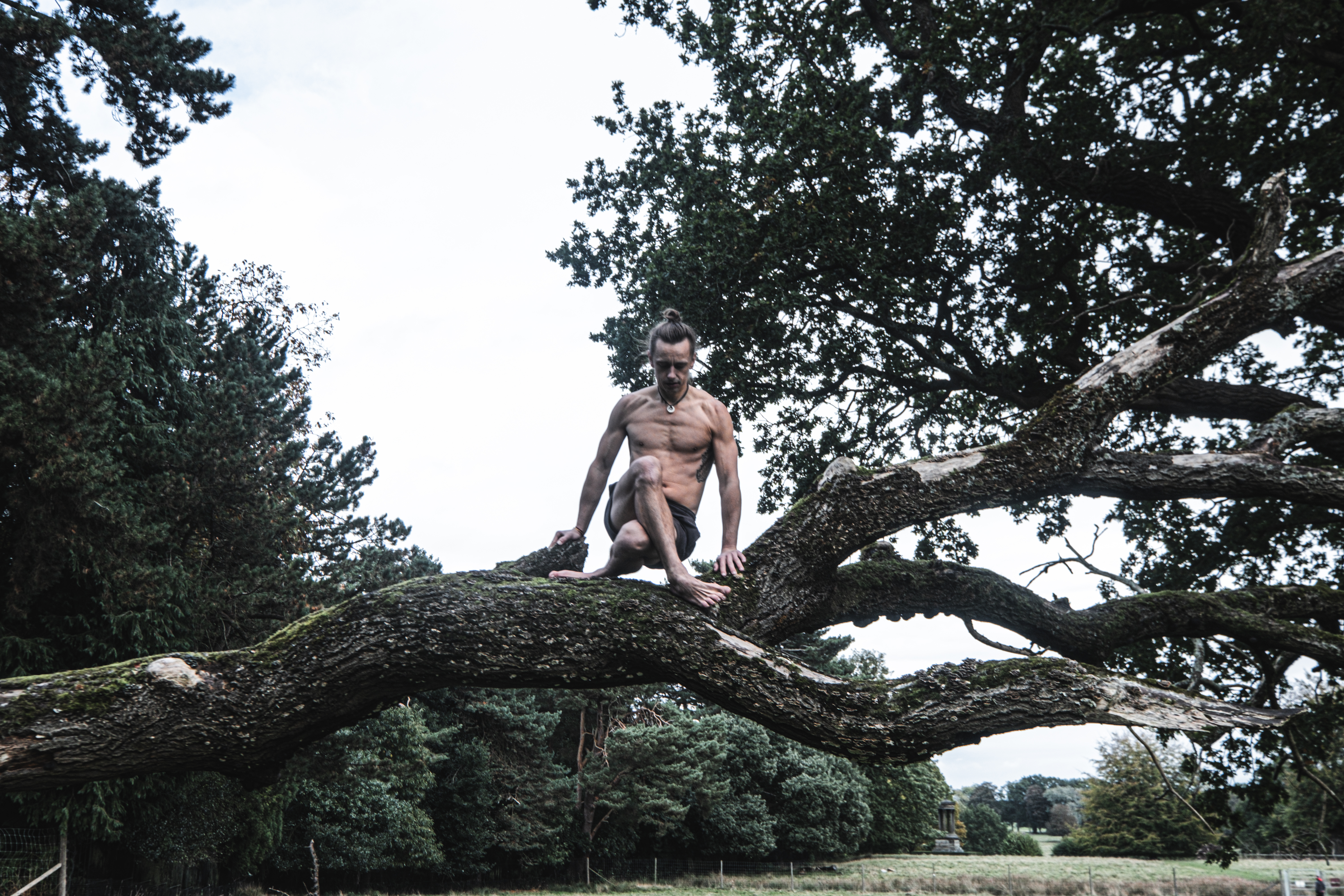
This is healthier than “rusted shut locks”. Muscles that can’t relax don’t open the energy locks.
Bandha has had a bad wrap
You may have heard the term banded about in certain yoga contexts but its prevalence is usually limited and not explained beyond tighten or grip. I presume it sounds more educated or informed or takes people on a different journey to think they’re practicing something exotic.
Hand and foot (oft quoted hasta & mani bandhas), or the infamous moola bandha you may have heard. What you will be less likely to hear is that bandhas are subtle locks for subtle flows of energy. Instead instructors tend to use the word bandha as a euphemism for “grip”. My advice, just say grip, but don’t forget to advise to expand and relax afterwards.
And many aspiring teachers treat them like rusted locks in that they never seem to teach people how to unlock!
You see how there’s a big important piece missing therein?
And beyond only being half taught/understood, here are the predominant unhelpful though common misunderstandings of pretty important major bandhas.
Moola/Mula bandha is one popularised by the infamous Ashtanga Vinyasa style, usually taught in the context of lifting the body onto the weight of the hands (not dissimilarly as pictured). However the lock was often only taught closed and in such an unhelpful way as to also lock up many of the other areas of the body and essentially make Patanjali’s assertion difficult to achieve. More on that below. Due to a combination of the guru of the style having a poor grasp of English language and other questionable approaches to his students, the queue often was distilled into “tighten the anus”. Unfortunately this wasn’t qualified with the accuracy or vital follow up instructions “and don’t continue to tense unnecessarily”. If we don’t give the body this conscious clue we can very easily hold tension unconsciously.
The other popular misconceived use of moola bandha is during pranayama where the same issues are often left without clarity and people practiced consciously tightening and NOT consciously relaxing and expanding (which is ALSO bandha).
SO as it’s there, lets just try to clear a little of the confusion left by the ashtanga vinyasa school about “tense the anus”. That alone is not mūla bandha but closer to ashwini mūdra. Tightening the anus may also incidentally concentrically engage the perennial muscles, but that method DOES NOT allow coactivation which is a signifier of bandha according to Simon Borg Olivier. Accuracy means Mūla bandha can be effectively practiced as NOT TIGHTENING the anus (or urethra) and only concentrically engaging perennial (sit bone binding) muscles. Who’s going around the shala checking that then?
Best thing is to not teach moola bandha unless you are prepared to ask people aloud and do you best to get them to understand which muscles are on, off, which they are not aware of, and to get people practicing ashwini mūdra until they’ve built the awareness to practice the more subtler art of mūla bandha. And if they want to safely practice pendulum pose or handstand, leave the posture practice to teach them the bandhas. Teach how to practice with safe wrists, shoulders and neck as a priority.
Now last thing. How do you teach ordinary people to voluntarily coactivate joint complexes for better energy when many of them cant feel their bodies until some thing goes wrong?
We need a rethink of dynamistic postural yoga before students continue to think it’s a fad.
We need to understand that the complexity of yoga postures is not something to meddle in without a grounded understanding of the brain and body. Near enough 350 joints in the human body bring about a maths breaking multitude of possibilities of movements. In the Shiva Samhita, it’s quoted there are 8,400,000 postures. We cannot do this with the logical left brain alone and need to appreciate some of our greatest. We cannot use the left brain to remember how to do things with the body.
We need a model of a felt internal balance and vitality. We need to understand that running the body through its paces will not guarantee health or meditation. I’m satisfied that Synery’s 4 principles cover the basis for safe and effective practice. Active movement, from the core with the ability to breathe naturally, and with multidimensional (non linear/repetitive) movement I think does a better job of creating coactivation (aka bandha) than classical yoga poses. Classical yoga poses were given to people with more body awareness and the predisposition of gentleness. We don’t have that in abundance in modern times and our culture of modernity. We have technology built on the oppression of land and people and don’t see the disconnects all around us.
How does Synergy help us balance internal/external energies and vitality? Because is it a practice in restraint through thing which serve our body and mind in the spirit of spiritual balance and kindness to life. By taking apart postural actions into bitesize flows and simple repetitive multi dimensional movements, the body learns and opens energy gates that might otherwise be dormant from not practicing and blocked through overzealous physical tightening. Iyengar would spend weeks teaching one pose because of the complexity. Many times the practitioners of this style would not put it back together or have the satisfaction of linked postures in a sequence. Synergy offers the benefits of that complexity without the risk of getting a headache over trying to think about it too much.
My approach is like giving major pieces which are complex actions in stages then having some time in the pose. Example, triangle pose has right side bending & rotation to the left of the torso, right hip abducting and externally rotating, left hip internally rotating and adducting. From experience, around 50% of the class will understand and execute these complex movements and even less without excessive force. More reliably asking people to actually enact these movements out takes the pressure off them having to conform to a specific alignment and move who their body can most easily. Therein the awareness is built without thinking and the pose is broken down over time for ease and the energies and bandhas are more balanced.
Arguably this is bandha over time. Like in the anus tensing example, I argue bandha doesn’t need to be static and that one can tense muscle groups without coactivation and providing they can also relax and expand those same muscles subsequently, it is a form of bandha. Stretching that arguement further, a well balanced sequence which covers a full spectrum of dimensions of movement also illicit bandha over time.
Or to close, I’ll say a balanced sequence offers us a balanced perspective, and a model of balanced energy we can be continuously supported by. A lifetime of yoga exploration which helps us to build our subtle muscles of discernment in how we physically move can translate to how we mentally move and choose to bring ourselves and guide those around into holistic harmony and wellbeing.
For more on these topics you could look into the following:

Synergy Principles
Synergy focusses on the spinal awareness, movement & positions first. 1 activated movement 2 from the core 3 with natural breathing 4 with flow

Yama : Benefits of restraint & a non-reductive interpretation
how to apply yamas to movement and also off the mat. Samskaras are created from unconscious patterns. Yamas help us to restrain from making the same mistakes over and over again
Polyvagal theory & yoga practice
What is the vagus nerve and how does it apply to everyday life and feature in yoga / mindful awareness practice?
10 minute read
 yogastef